Gateway 2026 Biosimilar Trends
What you need to know about market trends as the specialty pipeline expands and biosimilars reshape the cost picture. Get the report below.

What you need to know about market trends as the specialty pipeline expands and biosimilars reshape the cost picture. Get the report below.
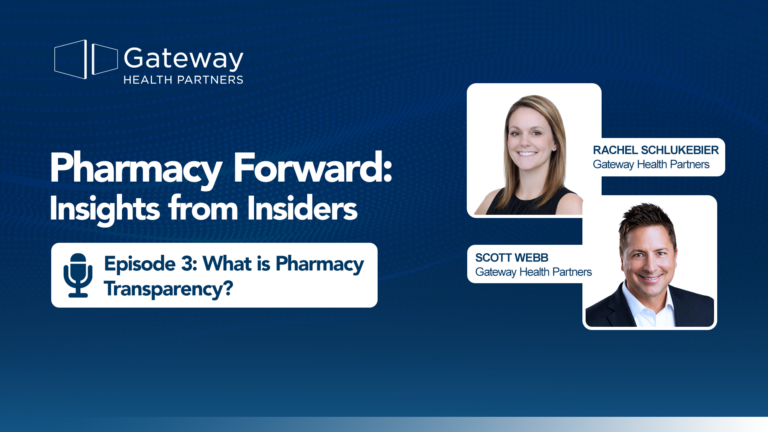
Pharmacy Forward Podcast, Episode 3 Welcome to Episode 3 of Pharmacy Forward: What is Transparency featuring Schlukebier, President and Scott Webb, Chief Growth Officer. Join our host Lesley Pink as she and our guests as they explore what transparency really means in pharmacy benefits and why it has become a baseline expectation for plan sponsors…
The pipeline for specialty and advanced therapies continues to expand. Gene therapies, targeted oncology treatment, and high-cost biologics are expected to significantly affect pharmacy benefits over the next decade. Employer-sponsored health plans should start preparing now for how they are going to handle these costs. The specialty market was $92.5 billion in 2023 and could…
Biologic drugs are medicines that come from living organisms, like genes and proteins. Biologics make up about 5% of U.S. prescriptions, but more than 50% of total prescription drug spending in the country. Biosimilar drugs are biologic drugs that are highly similar compared to their reference products, which are existing biologics. Biosimilars are not exact…
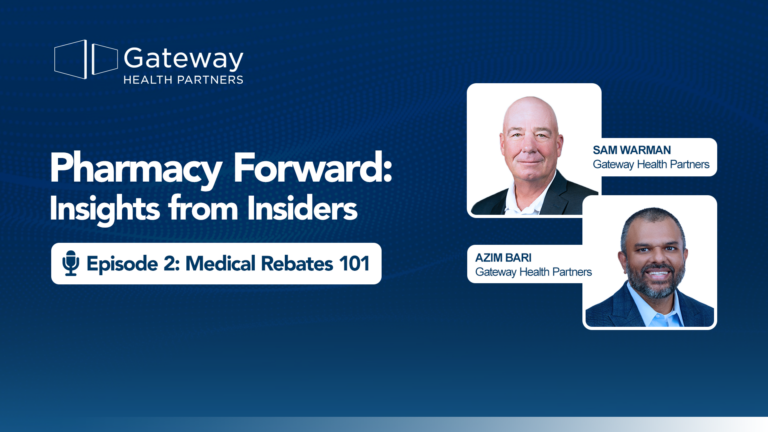
Pharmacy Forward Podcast, Episode 2 Welcome to Episode 2 of Pharmacy Forward: Medical Rebates 101, featuring Azim Bari, Chief Clinical Officer and Sam Warman, VP, Client Consulting. Join our host Lesley Pink as she and our guests dive into the world of medical rebates, exploring how medical rebates differ from pharmacy rebates and why they…
This year, the prescription drug landscape is shifting from a focus on rebates toward a more transparent view of net costs. For years, manufacturer rebates paid to pharmacy benefit managers (PBMs) have been key to drug pricing. These rebates were meant to lower overall spend but they sometimes hid the real costs paid by payers…
Direct-to-consumer (DTC) pricing for medications is making a splash. With DTC, drug manufacturers sell medications directly to patients instead of through a retail pharmacy or pharmacy benefit manager (PBM). This is a shift from the traditional pharmacy model. Some drugs, including those for weight management, now have a DTC model. Eli Lilly & Co. and…
The first biosimilar was approved in the U.S. in 2015. And now, just over 10 years later, the U.S. Food & Drug Administration (FDA) has approved an additional 81 biosimilars. In 2025 alone, the FDA approved 18 new biosimilars for a range of indications. However, only 73% of those approved biosimilars have been launched as of September 2025. Last year, the U.S. market size for biosimilars was estimated to be $22.59 billion….